
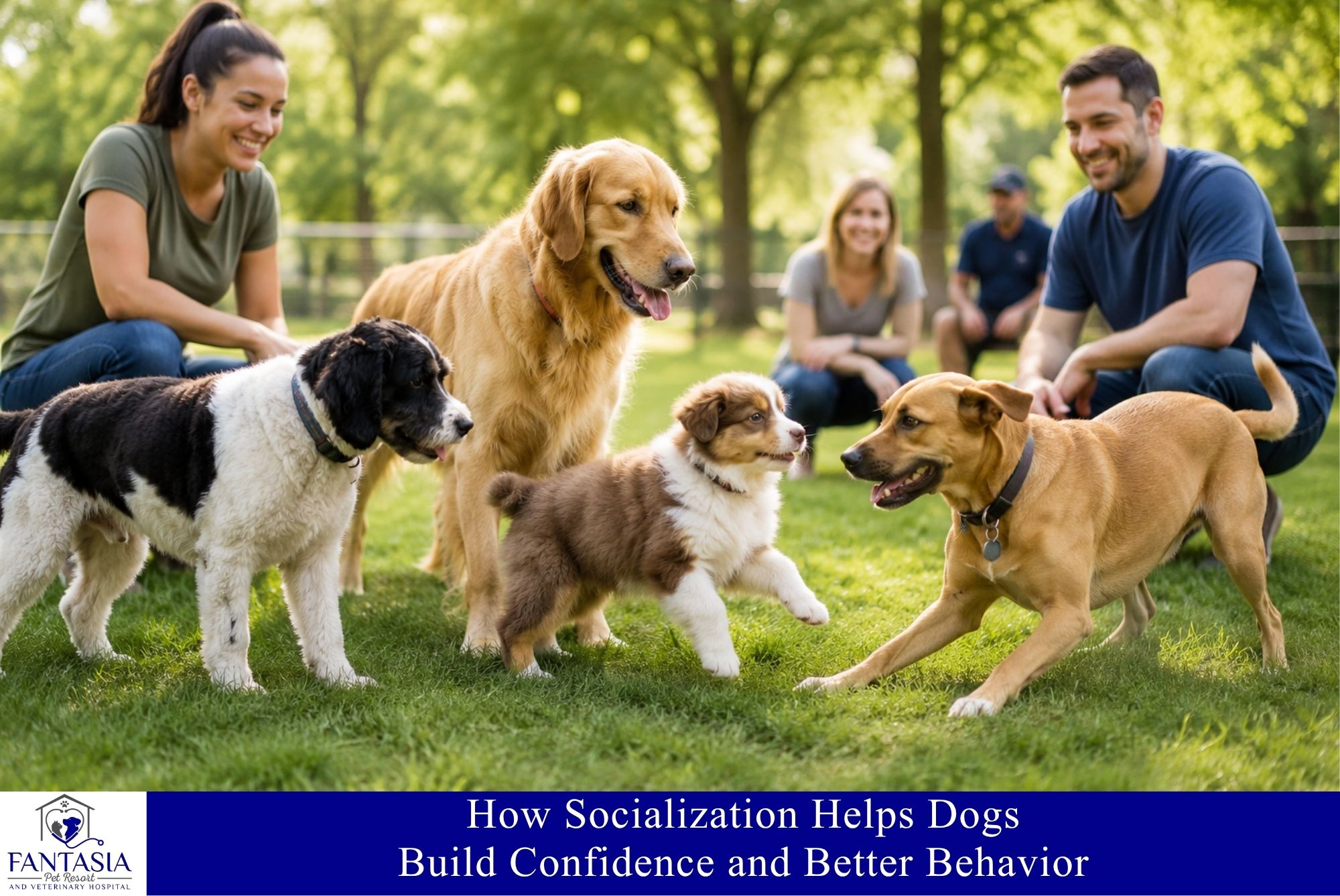
For many dog owners, raising a happy, well-behaved dog starts with one essential factor: proper socialization. Dogs are naturally social animals, but without positive experiences around people, pets, and new environments, they can develop fear, anxiety, or unwanted behaviors. Early and ongoing socialization helps dogs become more confident, obedient, and emotionally balanced throughout their lives.
At Fantasia Pet Resort and Veterinary Hospital in Reno, NV, pet owners understand the importance of helping dogs feel comfortable and secure in the world around them. Whether your dog is a playful puppy or an older companion needing confidence-building experiences, safe socialization can significantly improve their quality of life.
What Is Dog Socialization?
Dog socialization is the process of safely exposing dogs to different people, animals, sounds, environments, and experiences in a positive and controlled way. The goal is to help dogs learn that new situations are not threatening.
Proper socialization may include:
- Meeting other friendly dogs
- Interacting with adults and children
- Visiting new places
- Hearing common sounds like traffic, vacuums, or thunderstorms
- Experiencing grooming, boarding, and veterinary visits
- Learning how to behave calmly in public settings
Socialization is most effective during puppyhood, but adult dogs can also benefit greatly from continued exposure and positive reinforcement.
Why Socialization Is Important for Dogs
1. Builds Confidence
Socialized dogs are generally more comfortable navigating unfamiliar situations. When dogs regularly experience positive interactions, they learn how to adapt rather than react with fear.
Confident dogs are more likely to:
- Stay calm in busy environments
- Handle changes in routine better
- Approach new experiences with curiosity instead of fear
- Recover quickly from stressful situations
Dogs lacking socialization often become nervous or reactive when encountering unfamiliar people, pets, or environments.
2. Reduces Anxiety and Fear-Based Behaviors
Many behavioral problems stem from fear or uncertainty. Dogs who have limited interaction with others may become anxious, overly protective, or reactive.
Proper socialization helps reduce:
- Excessive barking
- Aggression toward strangers or dogs
- Separation anxiety
- Fearful hiding
- Destructive chewing or pacing
- Stress during boarding or vet visits
By gradually introducing dogs to positive social experiences, they learn healthy coping mechanisms and emotional resilience.
3. Improves Obedience and Training
Socialized dogs are often easier to train because they can focus better in stimulating environments. Dogs who are comfortable around distractions are more likely to respond consistently to commands.
Benefits include:
- Better leash manners
- Improved recall
- Stronger impulse control
- More reliable behavior around guests and other animals
- Easier public outings
Training and socialization work hand-in-hand to encourage positive behavior.
4. Encourages Healthy Play and Communication
Dogs communicate through body language, vocalizations, and play styles. Safe interaction with other dogs teaches important social cues and boundaries.
Well-socialized dogs are more likely to:
- Play appropriately
- Respect other dogs’ signals
- Avoid unnecessary conflict
- Build positive relationships with other pets
Structured group play and supervised interactions can help dogs develop these valuable social skills.
5. Makes Veterinary and Boarding Visits Less Stressful
Dogs who are accustomed to new people and environments typically experience less stress during veterinary appointments, grooming visits, or overnight boarding stays.
Positive exposure can help dogs:
- Feel calmer during exams
- Cooperate during grooming
- Adapt more easily to temporary separation from owners
- Enjoy daycare or boarding experiences
This contributes to better overall health and wellness throughout a dog’s life.
Signs Your Dog May Need More Socialization
Some dogs may show subtle signs that they need additional confidence-building experiences.
Common signs include:
- Fear around strangers
- Lunging or barking at other dogs
- Nervousness during walks
- Hiding in unfamiliar settings
- Difficulty adjusting to change
- Overexcitement around people or pets
If your dog struggles in social situations, gradual exposure and professional guidance can make a meaningful difference.
Tips for Safely Socializing Your Dog
Start Slowly
Introduce new experiences gradually to avoid overwhelming your dog.
Use Positive Reinforcement
Reward calm behavior with treats, praise, or toys.
Choose Controlled Environments
Safe, supervised settings help dogs build confidence without fear.
Watch Body Language
Pay attention to signs of stress such as tucked tails, excessive panting, or avoidance.
Keep Experiences Positive
Never force interactions. Positive experiences build trust and confidence over time.
Continue Socialization Throughout Life
Dogs benefit from ongoing exposure and enrichment at every age.
Professional Support Can Help
Some dogs benefit from professional daycare, boarding, training, or veterinary support that encourages positive social interaction in a safe environment.
At Fantasia Pet Resort and Veterinary Hospital, pets receive compassionate care designed to support both their physical and emotional well-being. Structured social opportunities, professional supervision, and veterinary expertise can help dogs thrive in a safe and enriching setting.
Frequently Asked Questions About Dog Socialization
When should puppies start socialization?
Puppies should begin socialization as early as possible, typically between 3 and 14 weeks of age. Early positive experiences can have a lasting impact on behavior and confidence.
Can older dogs still be socialized?
Yes. Adult dogs can absolutely benefit from socialization. While progress may take more time and patience, positive experiences can help reduce anxiety and improve behavior at any age.
How do I know if my dog is overwhelmed?
Signs of stress may include:
- Trembling
- Hiding
- Growling
- Excessive barking
- Tail tucked between legs
- Panting excessively
- Avoiding interaction
If your dog shows these signs, give them space and slow down the introduction process.
Is daycare good for socialization?
Dog daycare can be beneficial when supervised by trained professionals who ensure safe, structured interactions. It can help dogs build confidence, burn energy, and improve social skills.
Can socialization help with aggression?
In some cases, proper socialization and professional training can help reduce fear-based aggression. However, dogs showing aggressive behavior should be evaluated by experienced professionals to create a safe behavior plan.
What happens if a dog is not socialized?
Dogs lacking socialization may develop anxiety, fear, aggression, or behavioral challenges. They may struggle with new experiences, unfamiliar people, or interactions with other pets.
How often should dogs socialize?
Dogs benefit from regular social experiences throughout their lives. Even short, positive interactions can help reinforce good behavior and emotional stability.
Should socialization include exposure to different environments?
Absolutely. Exposure to parks, sidewalks, veterinary clinics, car rides, grooming visits, and busy public areas helps dogs become more adaptable and confident.
Help Your Dog Thrive With Compassionate Care
Helping your dog become confident, calm, and well-behaved starts with positive experiences and proper socialization. Whether through supervised play, boarding, veterinary care, or routine interaction, socialization plays a major role in a dog’s emotional and behavioral development.
Fantasia Pet Resort and Veterinary Hospital proudly serves pet owners throughout Reno, NV with compassionate veterinary care and pet services designed to support happy, healthy pets.
Contact Information
Fantasia Pet Resort and Veterinary Hospital
6340 N. Virginia St.
Reno, NV 89506
Phone: (775) 322-1199
Website: fantasiapetresort.com
Request An Appointment:
https://fantasiapetresort.portal.gingrapp.com/public/new_customer