
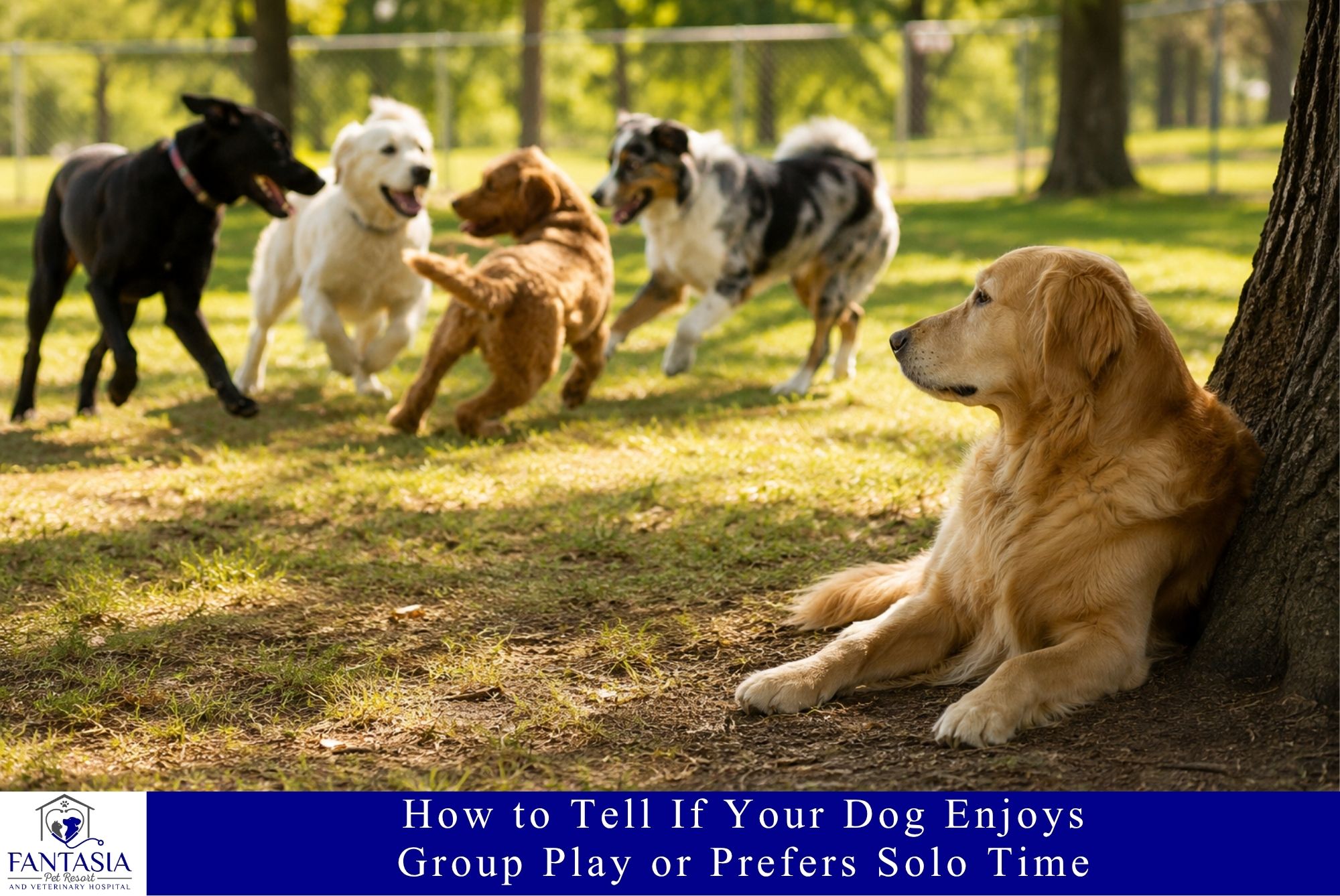
Dogs are social animals, but just like people, every dog has a unique personality. Some thrive in energetic group play sessions at dog parks or daycare, while others feel happiest spending quiet time with their favorite humans or engaging in one-on-one activities. Understanding your dog’s social preferences is essential for supporting their emotional well-being, reducing stress, and helping them feel safe and confident.
At Fantasia Pet Resort and Veterinary Hospital, we believe that learning to read canine body language can help pet owners better understand what their dogs truly enjoy. Whether your pup loves making furry friends or prefers independent adventures, recognizing their communication cues can strengthen your bond and improve their quality of life.
Why Understanding Your Dog’s Social Personality Matters
Not all dogs are naturally outgoing. Some dogs are extroverted and playful, while others are more reserved or selective about their interactions. Respecting your dog’s comfort level can help prevent anxiety, overstimulation, and negative social experiences.
Forcing a shy or anxious dog into busy group environments may lead to stress-related behaviors such as:
- Excessive barking
- Hiding or cowering
- Aggression or snapping
- Tail tucking
- Trembling
- Refusing to engage
On the other hand, dogs that enjoy social interaction can become bored or frustrated without regular opportunities for play and enrichment.
Understanding where your dog falls on the social spectrum allows you to create healthier experiences tailored to their personality.
Signs Your Dog Enjoys Group Play
Dogs who enjoy social settings typically display relaxed, happy body language around other dogs. Group-loving pups often seek interaction and appear energized after social activities.
Common Signs Your Dog Likes Group Play
Loose and Relaxed Body Language
Happy social dogs usually have:
- Relaxed muscles
- A soft face
- A gently wagging tail
- Playful movements
Their bodies appear loose rather than stiff or tense.
Play Bows
A play bow occurs when a dog lowers their front legs while keeping their rear end up in the air. This is one of the clearest invitations to play and often signals excitement and friendliness.
Initiating Interaction
Social dogs often:
- Approach other dogs confidently
- Sniff politely
- Encourage chasing or wrestling
- Return repeatedly to play after short breaks
Taking Healthy Breaks
Even highly social dogs need occasional pauses. Dogs who enjoy group play typically step away briefly, shake off, and then happily return to the action.
Relaxed Vocalization
Some playful barking or growling during healthy play is normal. The key is that the vocalizations sound relaxed and are paired with loose body language.
Signs Your Dog May Prefer Solo Time
Some dogs simply feel more comfortable in calmer environments. This does not mean they are unfriendly or unhappy—it just means their social needs are different.
Common Signs Your Dog Prefers Independent Activities
Avoiding Other Dogs
Dogs who prefer solitude may:
- Stay close to their owner
- Ignore invitations to play
- Move away from energetic dogs
- Choose quiet corners
Stiff or Tense Body Language
A dog experiencing discomfort may display:
- Raised hackles
- A stiff tail
- Frozen posture
- Intense staring
These can indicate stress or uncertainty.
Hiding or Seeking Escape
Dogs who feel overwhelmed often look for exits, hide behind their owners, or try to leave the environment entirely.
Overstimulation
Some dogs become stressed after too much social interaction and may show signs such as:
- Panting excessively
- Yawning repeatedly
- Lip licking
- Pacing
- Shaking off frequently
Enjoying Independent Enrichment
Dogs who prefer solo time often thrive with:
- Puzzle toys
- Sniff walks
- One-on-one training
- Quiet cuddle sessions
- Independent backyard exploration
Understanding Canine Body Language
Learning to read your dog’s body language is one of the best ways to determine whether they are comfortable in social settings.
Relaxed and Happy Signals
These signs generally indicate comfort:
- Soft eyes
- Relaxed ears
- Loose wagging tail
- Open mouth with relaxed tongue
- Playful bouncing movements
Stress Signals
Watch carefully for:
- Lip licking
- Yawning when not tired
- Turning away
- Whale eye (showing whites of eyes)
- Tail tucked low
- Trembling
- Excessive panting
These signals may mean your dog needs space or a break.
Signs of Escalating Discomfort
If a dog becomes overwhelmed, they may:
- Freeze suddenly
- Growl
- Snarl
- Snap
- Lunge
It is important not to punish these warning signs. Instead, calmly remove your dog from the stressful situation and provide a safer environment.
Different Dog Social Personalities
Every dog is an individual, and personality can be influenced by breed tendencies, early socialization, age, past experiences, and overall temperament.
The Social Butterfly
These dogs:
- Love meeting new dogs
- Enjoy daycare or dog parks
- Thrive on activity and interaction
- Recover quickly from excitement
The Selective Socializer
These dogs:
- Enjoy a few trusted dog friends
- Prefer smaller groups
- May dislike rough play
- Need slower introductions
The Independent Dog
Independent dogs often:
- Prefer human companionship
- Enjoy solo walks and activities
- Feel overwhelmed in crowded settings
- Need quiet recovery time
The Sensitive or Anxious Dog
These dogs may:
- Become nervous in busy environments
- Need confidence-building training
- Benefit from gradual social exposure
- Require structured routines
How to Help Your Dog Thrive
Respect Their Comfort Level
Avoid forcing interactions your dog clearly dislikes. Instead, allow them to build confidence at their own pace.
Choose the Right Environment
Some dogs do best in:
- Small playgroups
- Calm daycare settings
- Structured introductions
- Quiet walking trails
Others thrive in energetic dog parks or social boarding environments.
Focus on Positive Experiences
Reward calm behavior and create positive associations with social interactions using praise, treats, and patience.
Monitor Play Carefully
Healthy dog play includes:
- Role switching
- Pauses and breaks
- Loose movements
- Mutual engagement
If one dog seems fearful, overwhelmed, or unable to escape, it may be time to separate the dogs.
Work With Professionals
Veterinary professionals and trained pet care teams can help assess your dog’s behavior and recommend appropriate socialization strategies.
The Importance of Safe Socialization
Safe socialization helps dogs:
- Build confidence
- Reduce fear
- Improve communication skills
- Burn energy appropriately
- Prevent behavioral problems
However, socialization should always prioritize quality over quantity. A few positive interactions are far more valuable than overwhelming experiences.
At Fantasia Pet Resort and Veterinary Hospital, we understand that every dog has unique emotional and social needs. Whether your pet loves group play or prefers individualized care, our experienced team is committed to creating safe, enriching experiences tailored to each dog’s personality.
Frequently Asked Questions
Is it normal for my dog to dislike other dogs?
Yes. Not every dog enjoys interacting with other dogs. Some prefer human companionship or small, familiar social circles.
How can I tell if my dog is stressed during play?
Signs of stress include tail tucking, excessive panting, lip licking, hiding, stiff posture, and attempts to escape the situation.
Should I force my shy dog to socialize more?
No. Forced socialization can increase anxiety. Instead, introduce new experiences gradually and positively.
Are dog parks good for all dogs?
No. Some dogs enjoy dog parks, while others find them overwhelming. It depends on your dog’s temperament and comfort level.
What does healthy dog play look like?
Healthy play includes relaxed body language, play bows, taking turns, brief pauses, and mutual engagement between dogs.
Can older dogs become less social?
Yes. Senior dogs often prefer calmer interactions and may become less tolerant of rough or energetic play as they age.
Why does my dog play well sometimes but not others?
Dogs may feel differently depending on energy levels, health, environment, or the behavior of other dogs nearby.
Can daycare help social dogs?
Yes. Well-managed daycare environments can provide exercise, mental stimulation, and healthy social interaction for dogs who enjoy group play.
How do I know if my dog prefers solo activities?
Dogs who consistently avoid other dogs, seek quiet spaces, or appear stressed in social settings may prefer more independent activities.
Should puppies always be socialized with other dogs?
Puppies benefit from safe, positive socialization, but interactions should always be carefully supervised and age-appropriate.
Contact Fantasia Pet Resort and Veterinary Hospital
Fantasia Pet Resort and Veterinary Hospital
6340 N. Virginia St.
Reno, NV 89506
Phone: (775) 322-1199
Website: fantasiapetresort.com
Request An Appointment:
https://fantasiapetresort.portal.gingrapp.com/public/new_customer